Attribution Creative Commons Noncommercial No Derivatives Share Alike Zero

Manisha Koirala Ki Nangi Image Best

If the intent behind "best images" is to highlight her iconic work, consider focusing on her , red-carpet elegance , or humanitarian efforts . For example, her role as a cancer survivor and her work with organizations like The Pink Foundation have made her a symbol of resilience and advocacy. Sharing her quotes on strength, her accolades (including a Padma Shree), or her inspiring story resonates far more than any image seeking to exploit privacy.

The user might be looking for admiration for her acting skills or her contributions to the film industry rather than explicit content. Alternatively, if they're interested in her career highlights or iconic roles, that would be more suitable. I should focus on her achievements and influence in the industry instead of any potentially inappropriate content. manisha koirala ki nangi image best

In conclusion, I should address the request by steering it towards respectful content about Manisha Koirala's career and achievements, ensuring that the response is positive and avoids any potentially offensive or illegal material. Highlighting her impact on Indian cinema and her advocacy work, if applicable, would make for a more meaningful and appropriate post. If the intent behind "best images" is to

If the user is truly interested in Manisha Koirala's work, I could suggest looking into her filmography, awards, or interviews where she discusses her career. Emphasizing her talent and contributions would be more constructive. It's possible that the user meant to ask about her best performances or memorable roles, which would be a better direction for the post. The user might be looking for admiration for

Manisha Koirala has been a prominent figure in Indian cinema for decades. She began her career in the late 1980s and has been known for her powerful performances. However, discussing or promoting explicit content about her, especially without her consent, is inappropriate and potentially illegal. It's crucial to respect public figures' privacy and dignity.

When discussing public figures like Manisha Koirala, it's essential to prioritize respect for their dignity, privacy, and contributions to their field. Manisha Koirala is a celebrated Indian actress and humanitarian known for her powerful performances in films such as "Ek Duje Ke Liye" (1981) and "Mrityudaata" (1997), as well as her advocacy for cancer awareness after surviving the disease. Her career spans nearly four decades, marked by roles that challenged norms and showcased her versatility.

I should also consider ethical implications. Sharing explicit images without consent violates privacy rights and can contribute to objectification. It's important to promote respectful and positive representations of celebrities. Maybe the user made a mistake in the request and needs to be guided towards more appropriate topics.
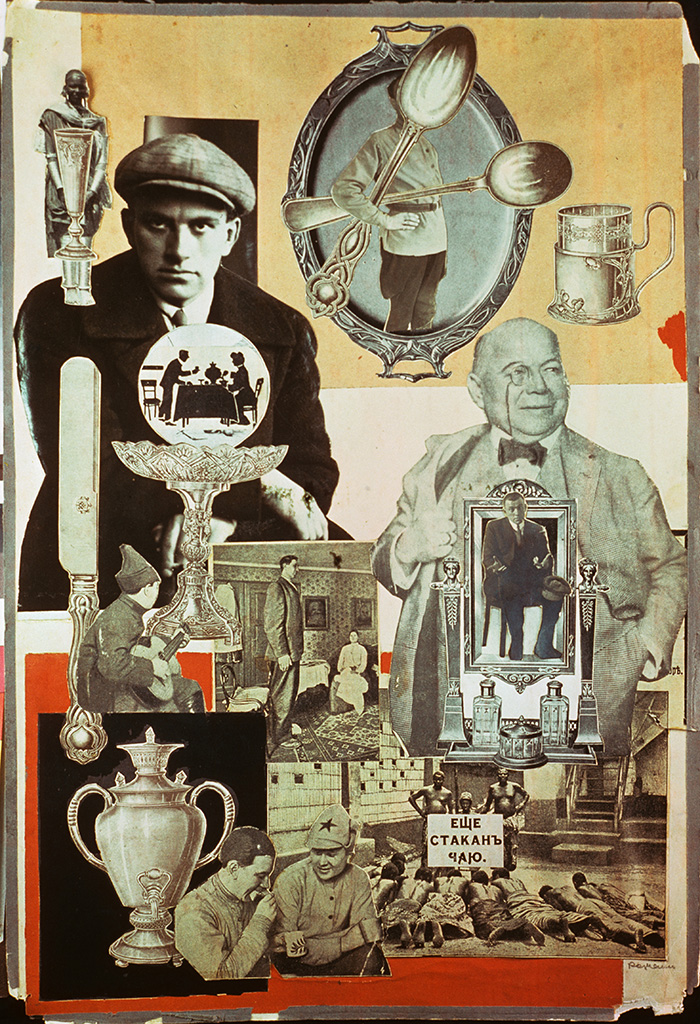
Fig. 1. — Brigade KGK (Viktor Koretsky [1909–98], Vera Gitsevich [1897–1976], and Boris Knoblok [1903–84]). “We had to overcome among the people in charge of trade the unhealthy habit of distributing goods mechanically; we had to put a stop to their indifference to the demand for a greater range of goods and to the requirements of the consumers.” From the 16th to the 17th Congress of the All-Union Communist Party (Bolsheviks), 1934, no. 57, gelatin silver print, 22.7 × 17 cm. Los Angeles, Getty Research Institute, 2014.R.25.
Fig. 2. — Brigade KGK (Viktor Koretsky [1909–98], Vera Gitsevich [1897–1976], and Boris Knoblok [1903–84]). “There is still among a section of Communists a supercilious, disdainful attitude toward trade in general, and toward Soviet trade in particular. These Communists, so-called, look upon Soviet trade as a matter of secondary importance, not worth bothering about.” From the 16th to the 17th Congress of the All-Union Communist Party (Bolsheviks), 1934, no. 56, gelatin silver print, 22.7 × 17 cm. Los Angeles, Getty Research Institute, 2014.R.25.
Collage of photographs showing Vladimir Mayakovsky surrounded by a silver samovar, cutlery, and trays; two soldiers enjoying tea; a giant man in a bourgeois parlor; and nine African men lying prostrate before three others who hold a sign that reads, in Cyrillic letters, “Another cup of tea.”
Fig. 3. — Aleksandr Rodchenko (Russian, 1890–1956). Draft illustration for Vladimir Mayakovsky’s poem “Pro eto,” accompanied by the lines “And the century stands / Unwhipped / the mare of byt won’t budge,” 1923, cut-and-pasted printed papers and gelatin silver photographs, 42.5 × 32.5 cm. Moscow, State Mayakovsky Museum. Art © 2024 Estate of Alexander Rodchenko / UPRAVIS, Moscow / ARS, NY. Photo: Art Resource.
Fig. 4. — Boris Klinch (Russian, 1892–1946). “Krovovaia sobaka,” Noske (“The bloody dog,” Noske), photomontage, 1932. From Proletarskoe foto, no. 11 (1932): 29. Los Angeles, Getty Research Institute, 85-S956.
Fig. 5. — Brigade KGK (Viktor Koretsky [1909–98], Vera Gitsevich [1897–1976], and Boris Knoblok [1903–84]). “We have smashed the enemies of the Party, the opportunists of all shades, the nationalist deviators of all kinds. But remnants of their ideology still live in the minds of individual members of the Party, and not infrequently they find expression.” From the 16th to the 17th Congress of the All-Union Communist Party (Bolsheviks), 1934, no. 62, gelatin silver print, 22.7 × 17 cm. Los Angeles, Getty Research Institute, 2014.R.25.
Fig. 6. — Brigade KGK (Viktor Koretsky [1909–98], Vera Gitsevich [1897–1976], and Boris Knoblok [1903–84]). “There are two other types of executive who retard our work, hinder our work, and hold up our advance. . . . People who have become bigwigs, who consider that Party decisions and Soviet laws are not written for them, but for fools. . . . And . . . honest windbags (laughter), people who are honest and loyal to Soviet power, but who are incapable of leadership, incapable of organizing anything.” From the 16th to the 17th Congress of the All-Union Communist Party (Bolsheviks), 1934, no. 70, gelatin silver print, 22.7 × 17 cm. Los Angeles, Getty Research Institute, 2014.R.25.
Fig. 7. — Artist unknown. “The Social Democrat Grzesinski,” from Proletarskoe foto, no. 3 (1932): 7. Los Angeles, Getty Research Institute, 85-S956.
Fig. 8A. — Pavel Petrov-Bytov (Russian, 1895–1960), director. Screen capture from the film Cain and Artem, 1929. Image courtesy University of California, Berkeley, Berkeley Art Museum and Pacific Film Archive Library.
Fig. 8B. — Pavel Petrov-Bytov (Russian, 1895–1960), director. Screen capture from the film Cain and Artem, 1929. Image courtesy University of California, Berkeley, Berkeley Art Museum and Pacific Film Archive Library.
Fig. 8C. — Pavel Petrov-Bytov (Russian, 1895–1960), director. Screen capture from the film Cain and Artem, 1929. Image courtesy University of California, Berkeley, Berkeley Art Museum and Pacific Film Archive Library.
Fig. 9. — Herbert George Ponting (English, 1870–1935). Camera Caricature, ca. 1927, gelatin silver prints mounted on card, 49.5 × 35.6 cm (grid). London, Victoria and Albert Museum, RPS.3336–2018. Image © Royal Photographic Society Collection / Victoria and Albert Museum, London.
Fig. 10. — Aleksandr Zhitomirsky (Russian, 1907–93). “There are lucky devils and unlucky ones,” cover of Front-Illustrierte, no. 10, April 1943. Prague, Ne Boltai! Collection. Art © Vladimir Zhitomirsky.
of