Enhanced/Dual Powered
Willem EPROM Programmer
User Guide
Main Board / Cables
Main Board PCB3.5
Main Board PCB4E

Main Board PCB5.0

Main Board PCB5.5C

|
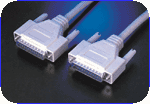
Parallel Data Cable (Printer extension cable, with male-female 25 pin connector, and pin to pin through) |
A-A type USB cable(for power) |
|
|
|
Optional Items:
|
ATMEL 89 Adapter |
ATMEL PLCC 44 Adapter |
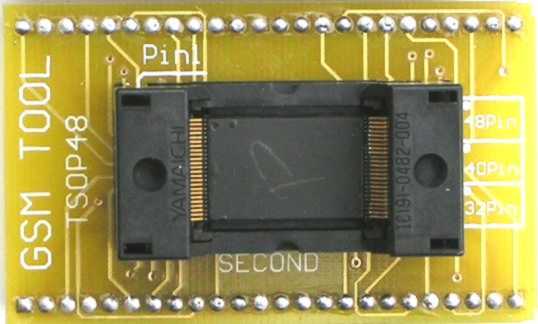
TSOP 48 Adapter |
|
|
|
|
|
FWH/HUB PLCC32Adapter |
PLCC32 Adapter |
SOIC Adapter(Simplified) |
|
On-Board |
On-Board |
|
|
AC or DC Power Adapter (9V or 12V, 200mA) |
SOIC Adapter(Professional) |
|
|
|
|
|
India, a country with a rich cultural heritage and diverse population, has made significant strides in empowering its women. However, despite these advancements, Indian women continue to face numerous challenges in various aspects of life.
In ancient India, women held a revered position in society, with many notable female figures such as Durga, Lakshmi, and Saraswati being worshipped as goddesses. However, with the passage of time, the status of women declined, and they were subjected to patriarchal norms and restrictions. The Indian Independence Movement in the 20th century marked a significant turning point, with women like Mahatma Gandhi's wife, Kasturba, and others playing a crucial role in the fight for freedom. boobs indian bhabhi
The empowerment of Indian women is a complex and ongoing process. While significant progress has been made, there are still many challenges to be addressed. The Indian government, civil society, and individuals must work together to address these issues and create a more equitable society for all women. India, a country with a rich cultural heritage
Hardware Installation & Configuration
|
Installation Steps
(Note: the LPT port of PC MUST set to ECP or ECP+EPP during BIOS setup. To enter the BIOS setting mode, you need press "Del" key or "F1" key during the computer selftest, which is the moment of computer just power up.)
Software Version To Use | |||
| |||
|
| |||
|
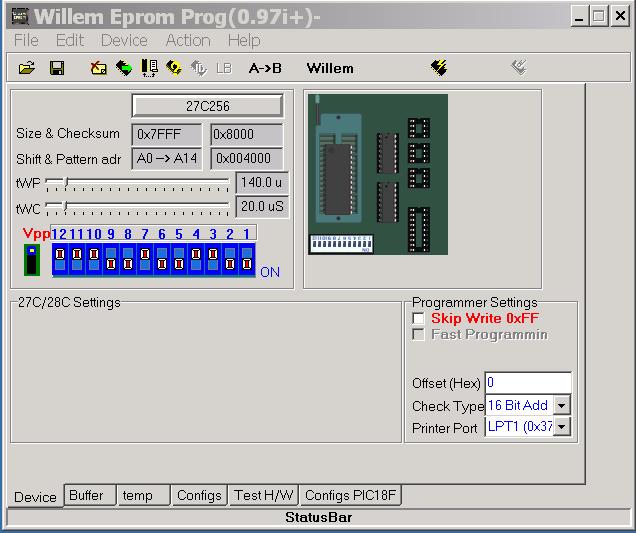
The software interface:
| |||
|
| |||
|
Hardware
Check
| |||
|
PCB3.5/PCB4E
PCB5.0
PCB5.5C
Note: the Vcc setting jumper only has effect when you are using AC adaptor as power source. For the USB power only 5V Vcc is available. For the PCB5.5C, set DIP steps: 1. press DIP Set button twice to check current DIP bit position. Then set it again for ON or OFF. 2. press DIP Bit shift button to shift the DIP bit position to where need to set. And then press DIP Set button twice to check current DIP bit position. Then set it again for ON or OFF. 3. Repeat those steps till all DIP bit ae set same as software indicated. For PCB5.5C voltage and Special chip selection: 1. Put back the safety jumper. 2. Press the voltage button and hold for 1 second, the voltage LED should move to next. Repeat till desired voltage LED light up. 3. Press the chip selection button and hold for 1 second, the chip LED should move to next. Repeat till desired LED light up. 4. Remove the safety jumper to lock the selected voltage and chip selection
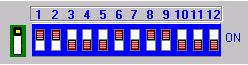
DIP Switch (PCB3.5, PCB5.0)
When programming one chip, follow the program prompt to set DIP switch .
|
India, a country with a rich cultural heritage and diverse population, has made significant strides in empowering its women. However, despite these advancements, Indian women continue to face numerous challenges in various aspects of life.
In ancient India, women held a revered position in society, with many notable female figures such as Durga, Lakshmi, and Saraswati being worshipped as goddesses. However, with the passage of time, the status of women declined, and they were subjected to patriarchal norms and restrictions. The Indian Independence Movement in the 20th century marked a significant turning point, with women like Mahatma Gandhi's wife, Kasturba, and others playing a crucial role in the fight for freedom.
The empowerment of Indian women is a complex and ongoing process. While significant progress has been made, there are still many challenges to be addressed. The Indian government, civil society, and individuals must work together to address these issues and create a more equitable society for all women.